Reflecting on work undertaken for property in California, Woodbridge.
Planning regulations are a vital framework. They are designed and implemented to ensure that development is sustainable and that building work both respects and develops the UK’s architectural heritage. However, it is sometimes our job to challenge this framework, whilst honouring the principles and goals of planning regulations.
This is particularly evident in the planning permission that we recently secured for a property in Woodbridge.
We were brought onto the project at California, Woodbridge, just after the client purchased the property. Their immediate goals were to knock down the existing dwelling and replace the building with a modern detached house. However, on an initial site visit, Peter noticed an unique opportunity. The plots of California are characteristically very long and thin and the bungalows along this street are of a very typical 60’s design. Peter suggested it would be better to place a new dwelling on the rear of the property, annex the land, and renovate the property that sits on the boundary line of the street.
This is what is called ‘back land development’. In the UK, this kind of development is discouraged because it can mean the loss of green space, or it can cause issues with access to amenities and possibly disrupt the character of the area. When visiting the site, Peter made the assessment that on this property, back land development would actually benefit the area.
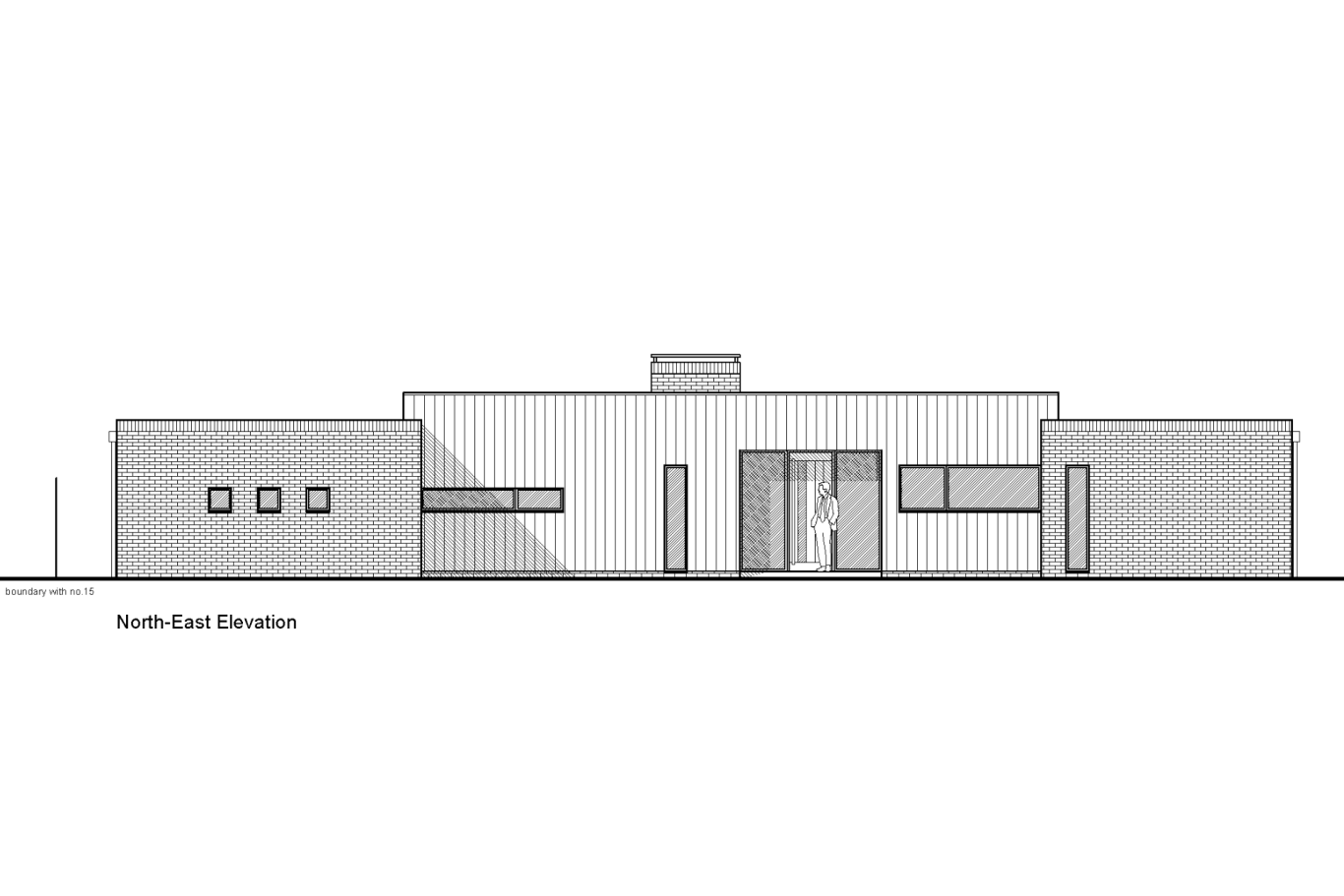
With the client’s blessing, we began working on the designs. Our aim with the dwelling at the rear of the property was to depart stylistically from the typicality of the bungalows, whilst also threading elements of the design into the new dwelling. As this property was being built at the rear of the property, it was important to think carefully about privacy for individuals both in the new dwelling and in the renovated property. Furthermore, the designs maximized the space on the plot, whilst not compromising the amenities attached to both dwellings. We submitted for planning permission, and as expected, the initial application was rejected.
Confident that this proposal was of merit, we engaged Jack Wilkinson of Wilkinson Planning to appeal this decision. He presented his arguments through a Statement of Case, addressing the planners concern. We’re pleased to say that the appeal committee agreed with his assertions and granted planning permission.
Our practice includes professionals that have been working as architects in Suffolk for over 30 years. The knowledge that our people have of the area isn’t just theoretical, it’s practical. We’ve worked on projects in almost every corner of the East of England and understand the nuances of developing land in our communities. Whilst it’s important to preserve key characteristics and aspects of our architectural heritage, it’s also important to ensure that our designs reflect the requirements of East Anglia’s growing communities and modern lifestyles. Our experience means we are able to accurately identify opportunities for this kind of development, and appeal planning permission rejections with certainty and fairness.